Saturday, 15 December 2018

The weaners take to the water

Here on Macca the elephant seal weaners have spent the last month or so of getting up to a whole lot of no good around station, and causing an incredible racket doing it. A few weeks ago their hunger must have got the better of them, as one day they decided it was time to venture into the water. 

Since then, every morning and evening the shallows are full of tumbling slippery bodies, hauling themselves in and out of the kelp and trying out all their new swimming moves. After several months of living on land (with bodies clearly not designed to), is must be an incredible experience to finally enter the water.

For a couple more weeks the weaners will stay on the island while they build their swimming strength up; once they feel ready they'll depart and spend the next year at sea before returning to the island next summer to malt.

This short window gives us ample time to spend a couple of evenings 'wading with weaners' - an absolute highlight of our year here.


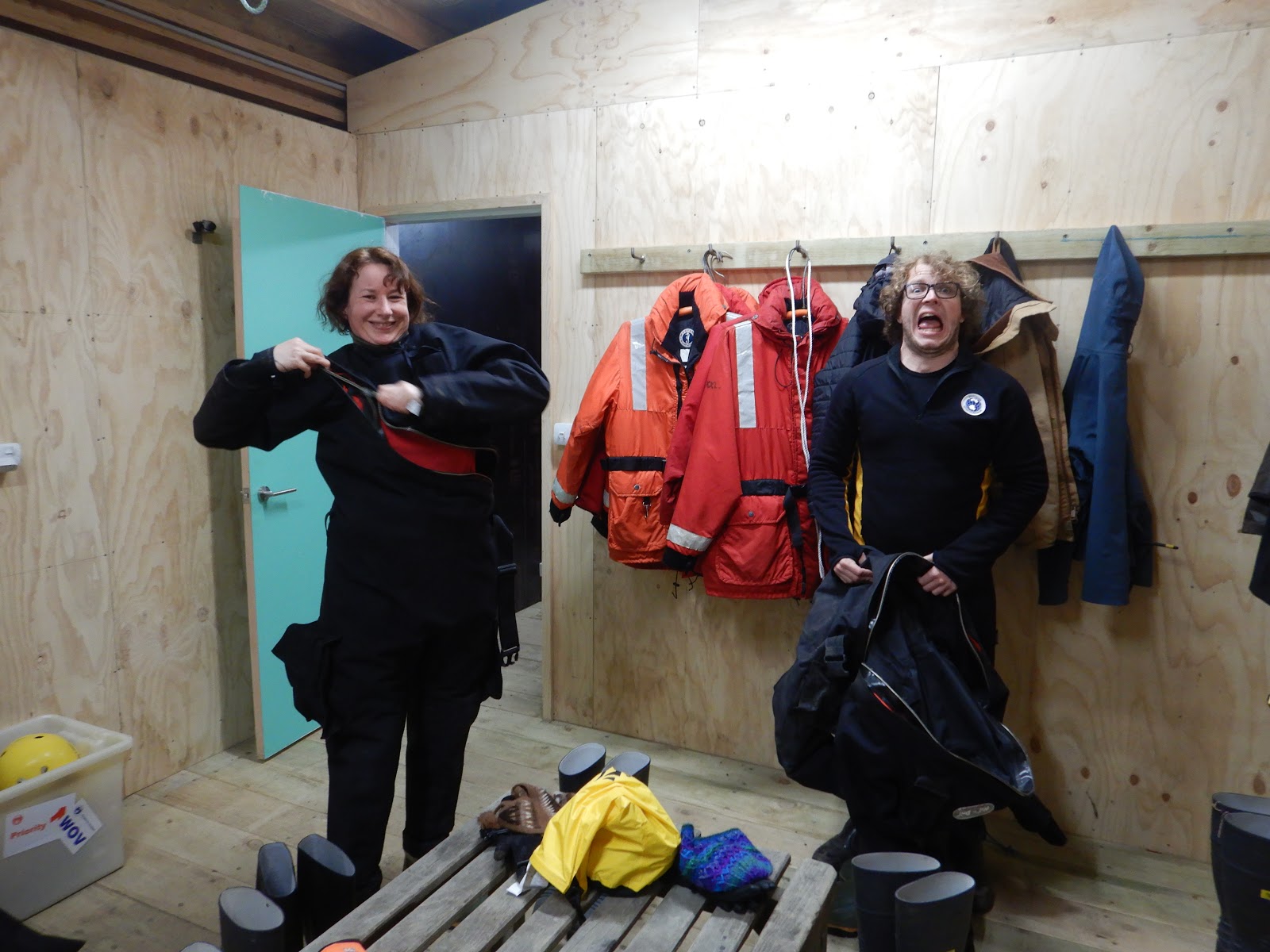
Vicky and Angus suit up pre-wade. Angus' facial expression demonstrates the significant unpleasantness of getting oneself into a shared drysuit (something to do with a combination of years of accumulated sweat and the discomfort of squeezing your head through the way-too small hole at the top).

Ali (our station leader) keeps watch. We have to have 3 lookouts monitoring the water for an hour beforehand to ensure there are no orcas about.

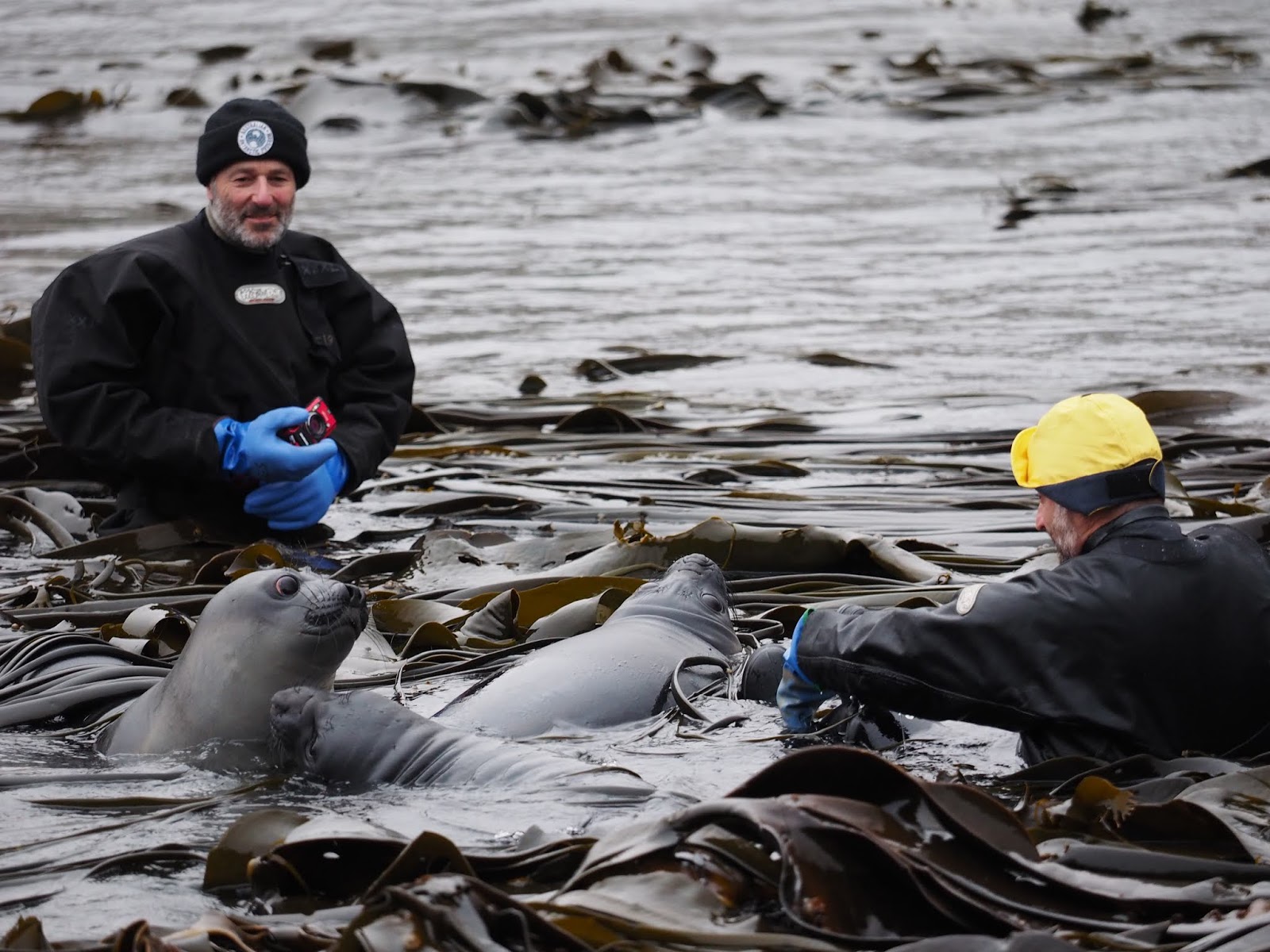
The water is bubbling with pups

Tim makes a few new friends

Not a bad way to spend an evening! The pups seem to really enjoy it too.

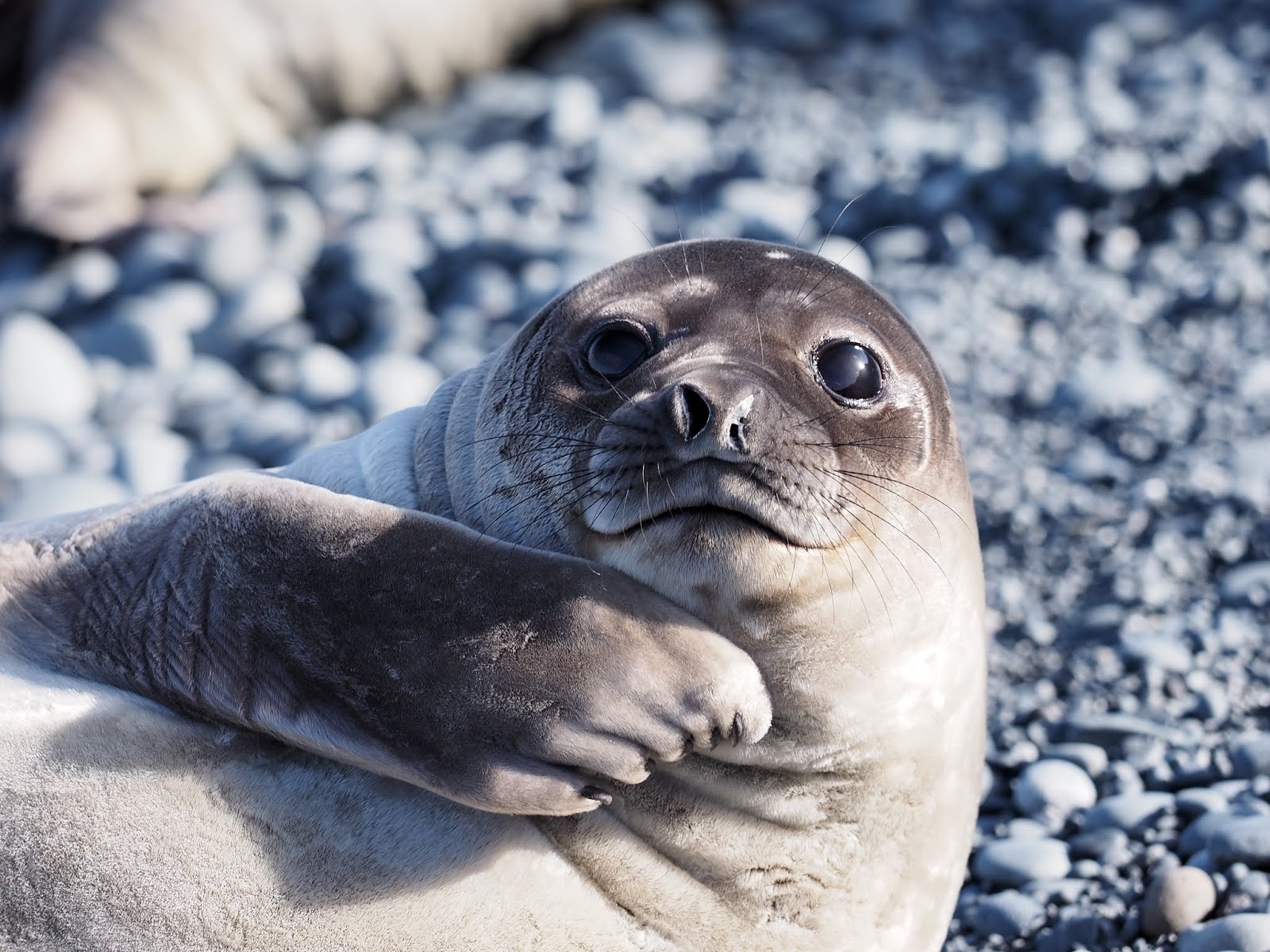
A particularly friendly young chap

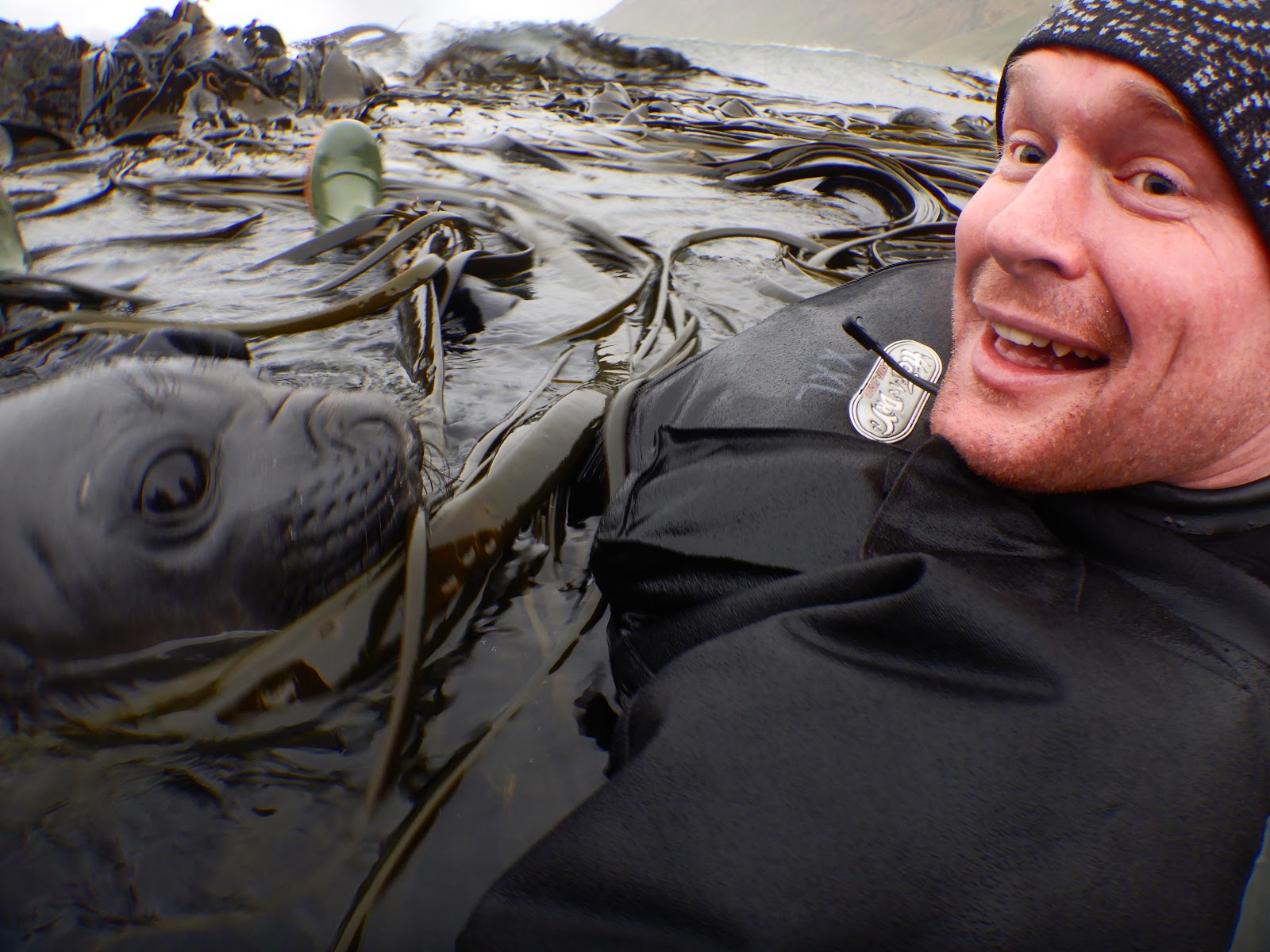
Rich takes a selfie

Half the station in the water. The pups still outnumber us 20 to 1.

Danielle is in love. Straight after this, one of the summer rangers (who is also a vet) informed us that the pups carry quite high rates of Tb. I'm just waiting for her to develop night sweats...

Norbert and Luke (one of the new summer crew) enjoy the attention

Annie (the aforementioned ranger and vet) keeps her mouth quite a bit further away

And right on cue (the following evening) a family of orcas arrive. They are now here almost every day, with family groups of 5-7 teaching their young ones the art of the hunt. It's incredible to watch and very hard to know who to gun for.

It's all very circle of life and we just happen to have front-row seat. Angus' superzoom lens caught this rather distressing image - yes, that's a weaner screaming as the large male orca grabs it.

A very happy orca (photo again courtesy of Angus)

Sunday, 2 December 2018

My medical minions

A lot of the time, being the doctor for 14 fit and well people can be a rather quiet job. Most of my consults are for aches and pains - pulled knees and rolled ankles (pretty much nowhere except inside is flat on this island), although I do get a smattering of other medical problems, and a bit of dentistry on the side too.

Despite my rather civilised working day, it's always in the back of my mind that any moment someone could have a major injury, or become seriously unwell. I think this is one of the few medical jobs in the world where you are the solo doctor on call 24 hours a day for 365 days straight.

In addition to this, we are over 1500km from Hobart, and only accessible by ship, so if a medical evacuation was needed, it could take a week or longer depending on weather.

Fortunately our medical facility here is extremely well equipped, with an emergency room, a ward, an operating theatre, a dental room, laboratory and radiology equipment. We could theoretically provide ICU level care with the equipment and medications on hand, but you can only do so much with one doctor.

However I'm not quite alone, as I have 4 minions - more formally known as lay surgical assistants (LSAs) ready to help me.

Back in Australia a few months before we leave, 4 tradies are selected to undergo 2-weeks training at the Royal Hobart Hospital. They usually have no experience in the medical field at all, but they quickly learn the basics of how to assist in a surgery - both with the anaesthetics, and with the surgery itself.

Introducing:
Angus - usually a meteorological technician, one of my anaesthetic LSAs
Pete - usually an electrician, the second anaesthetic LSA
Greg - usually a plumber, my scout nurse
Chris - usually a diesel mechanic, my scrub nurse

During the year here I build on their base knowledge with monthly training sessions to keep their skills up, and teach them how to help in other medical situations such as someone being severely injured, having a medical emergency, or even just needing a filling.


What better way to learn how to suture and staple then on a lamb we are planning to spit-roast that night. From left: Pete, Angus and Chris

Chris does a lovely running stitch while Pete masters a vertical mattress suture. In a live situation I'd get them to change out of their high vis first...

Angus has a go at using one of the tiniest needles we have (usually for eye surgery). It doesn't go terribly well.

In another session we set up the theatre from scratch ready for a surgery. Greg and Chris work out how to test the diathermy machine.

Pete and Angus run the (rather vintage) ventilator through its paces. They definitely look more authentic in scrubs.

Nurse Pete attaches monitoring to our patient Danielle in the pre-op room (actually the emergency room/lab/my office - space is at a premium here)

Greg checks off the instrument count list as Chris makes sure everything is ready to go. 

Our patient (with faux-appendicitis) is wheeled through into the operating theatre. Manoeuvring the trolley around the corners was probably the hardest bit of the exercise. 

And in a more recent session we try out plaster casting. Pete tries out a below elbow cast while Angus is on standby with the scissors (I'm not sure why)

Having been the patient Greg now tries out his skills on my leg - and a rather nice job too

Angus and Pete posing with plaster. As you can tell our sessions are very formal.

And the most nerve racking bit of the session for me - Angus wielding the plaster saw. Fortunately I remain intact.

Tuesday, 13 November 2018

Spring has sprung

Spring on Macquarie Island is heralded by the arrival of hundreds of mature bull elephant seals. Those in the prime of mating potential (usually around 10-12 years old) battle it out for control over a patch of beach. Their fights are short but vicious, with most sporting an array of old scars, fresh wounds, and bits of missing nose. Those successful are named 'beach masters' and they spend the next few weeks holding on to their little patch of territory until the arrival of their harems.

Right on a cue, the ladies arrive. Thousands of female elephant seals, heavy with pregnancy, haul themselves out of the waves to take up residence in their harem of choice. They leave it right until the last minute, and often it's only a day or two from when they arrive until when they give birth.

Birthing itself is over in under a minute and a 10kg barking pup in oversized skin adds to chaos. The noise coming from these harems is incredible. Within 5-6 weeks the 10kg has become 40kg (I can only imagine the calorie content of elephant seal breast milk) and the pup becomes a weaner. After that the females get a rather brutal re-impregantion (no rest for the wicked) and head out to sea again to replenish some of the weight they have lost. Meanwhile the weaners take up residence all over station, causing havoc and getting into every imaginable nook and cranny.

That's where we are up to at the moment, but come early late November/early December they'll be hungry enough that they decide it's time to learn how to swim.

Until the next installment...

Back in early September the bulls starting arriving and selecting their prime bits of coastline. This one decides I'm there to steal his patch and has a bit of a roar. I leave him to it.

A small break in the fighting and a bit of an itch to sort out. Very Jabba the Hutt.

Back to the fighting. The size and bulbous-ness of the nose indicates the maturity of the bull. This one is definitely in his breeding prime. A couple of scuffs as evidence to his recent fights.

A view down the east coast beaches near station - each harem is spread along 50-150m, with a gap before the next one. The mums are the light brown colour and pups are dark brown/black. The beach master is in the middle towards the back. Challenges from other bulls are frequent, so any good beach master sleeps with one eye open.

Too cute. It's hard to imagine this little chap growing into a 3-tonne blubber slug.

Lots of excess skin to grow into. Just as well, I don't think their skin could stretch fast enough to accommodate how quickly they grow.

Milk bubble dreams

They seem to feed almost non-stop for the first few weeks. A rare reprieve for mum - just long enough to digest a bit.

And before you know it, baby buddha emerges. This pup is probably 5-6 weeks old compared to those above who are around 1-2 weeks. The transformation is pretty profound.

Now that there are weaners around (meaning some females are back on heat) things hot up again with the beach masters. Surprisingly most challengers back down after a solid period of roaring, and you don't see as many physical fights as I thought there would be.

Of course the Orca now arrive. They know weaner feasts aren't too far away.

Gratuitous cute shot number 1: A slightly only weaner, working his blue steel

Gratuitous cute shot number 2: Working the upside down look

Gratuitous cute shot number 3: Trying out his very threatening roar

Wednesday, 31 October 2018

Go Go Gadget's


With the end of winter and the upcoming arrival of our summer expeditioners, the bi-annual mission to dig out Gadget’s Gully Dam has been on the to-do list for the last few weeks. All of our water on station is sourced from this dam and piped down the hill approximately 1.5km into our station tanks. The dam is filled by surface water from the plateau, and with the water comes a steady supply of sediment, rocks and mud which means a major dig out operation is required a couple of times each year.

Being a little bit lacking in the upper body strength department (and a lot lacking in the shovel-skill department) I felt comfortable in the presumption that there was no way I would be called on for the task.

But of course, when it turns out there are only 4 of you who are available for the job (not in the field and not on the fire team), upper body strength and shovelling abilities suddenly don’t count for much.

‘Team Gadgets 2018’ (Tim – our carpenter/BSS, Greg – our plumber, Danielle – one of our meteorological observers, and myself – the doctor) were up bright and early last Tuesday morning, hoping for a lovely sunny and wind-free day, but of course getting dense fog, bouts of rain, and the usual 20-30 knots of wind.

On initial inspection we thought it didn’t look too bad, but of course that was before we drained all the water out and realised that what we optimistically took for rock was in fact, quite a lot of mud. At that stage the only thing to do was to start shovelling. And shovel we did, for the next 6 hours or so (with the odd break for cups of tea and general cursing) until bedrock was hit and the job was done!

Team Gadgets (plus Danielle taking the photo) leave station equipped and trying to muster enthusiasm

Gadget’s Dam on our arrival. Doesn’t look too bad does it? Shame about the weather.

Tim, Greg and Danielle discuss the approach “We’ll drain it and then we’ll dig it out” while I document the momentous occasion.

Plumber Greg disconnects the station water supply line (heading over the hill on the left side of the frame) and the dam drain commences.

Ok, a bit more mud than we thought…

I get the digging while Tim throws water around

Tim and Greg encourage a lot of mud through a rather small hole in the base of the dam. A lot easier than bucketing it over the top which we originally tried....

Look at that shovel full. Not my happy place.

I get sick of digging and take up scrubbing. The dam wall does come up nicely.

Danielle in her not-so-yellow-anymore waterproofs, proudly standing by the finished product – check out that exposed bedrock! 

Tuesday, 16 October 2018

The island sushi train is pulling into station

Since pretty much the beginning of the year, I've been harping on about having a sushi train. We had one at Casey Station and it was great fun, even though the 'train' was a couple of trays on caster wheels and we just pulled it up and down the table.

For as long as I've been harping on about it, our Ranger (Chris) has been dropping very unsubtle hints about a top secret woodwork project he has had on the go; maybe a sushi train, maybe not.

After many months of talk and not a lot of action, we finally set the date for the last weekend of September. Because Chris wasn't quite sure he'd get his secret masterpiece finished on time, it was widely publicised that there would be some sort of event on that weekend; maybe a sushi train, maybe not.

Fortunately he pulled out all the stops, and the Macquarie Island sushi train really was not only finished on time, it exceeded expectations in every way. Danielle assisted with some stunning tunnel artwork, and Chef Annette and I got busy in the kitchen creating all manner of Japanese deliciousness.

So in the end the worst kept secret of the year was a riotous success of both hobby skills and cooking.

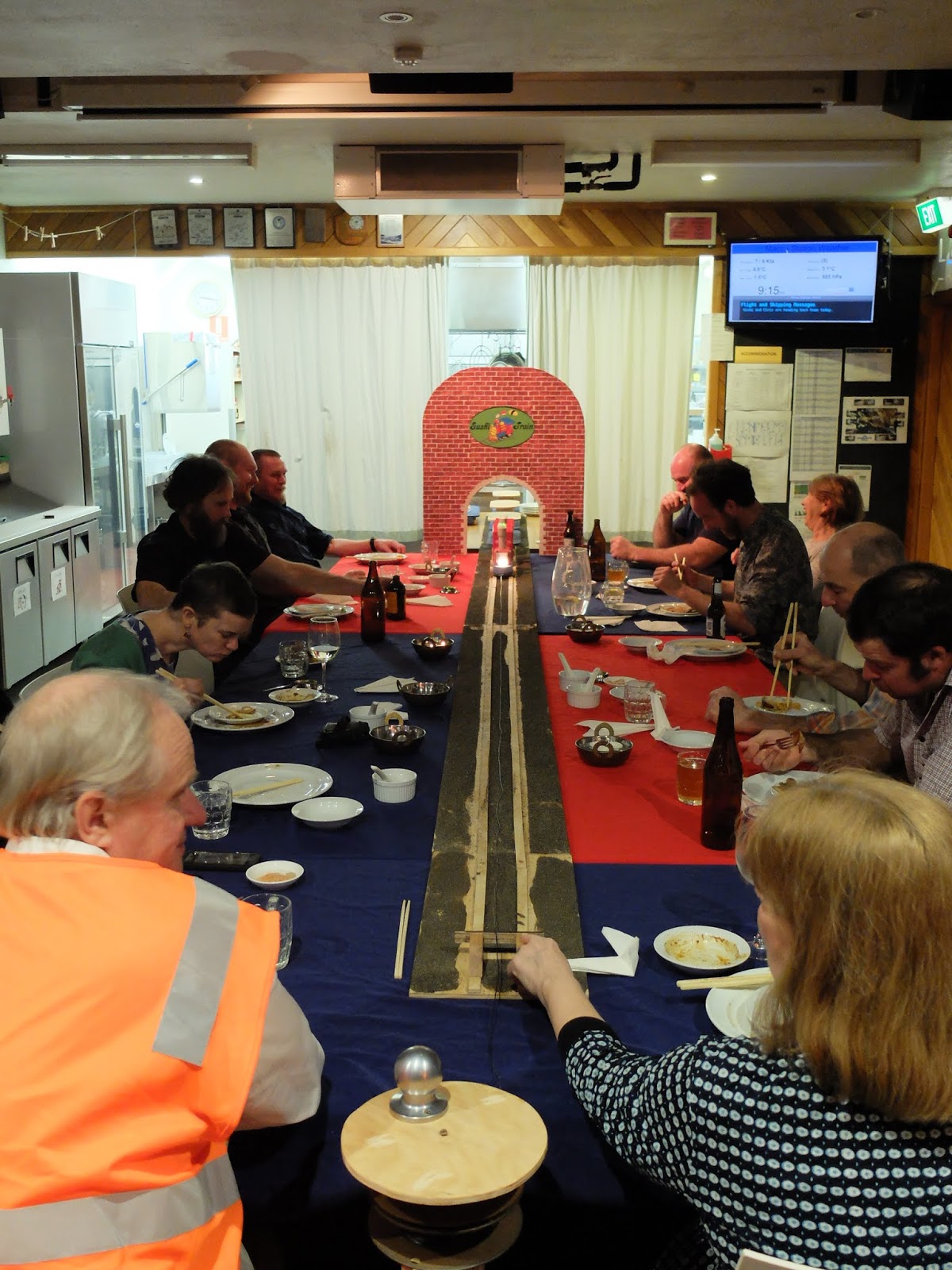
The Macquarie Island Sushi Train in all its splendour

But back to earlier in the day....Chef Annette prepares the dumplings

While Ranger Chris sorts out the table settings

I'm roped into the fray to make sushi - thank goodness our hydroponic garden has been producing lots of cucumbers recently

The sushi line up waiting to board the first train of the evening

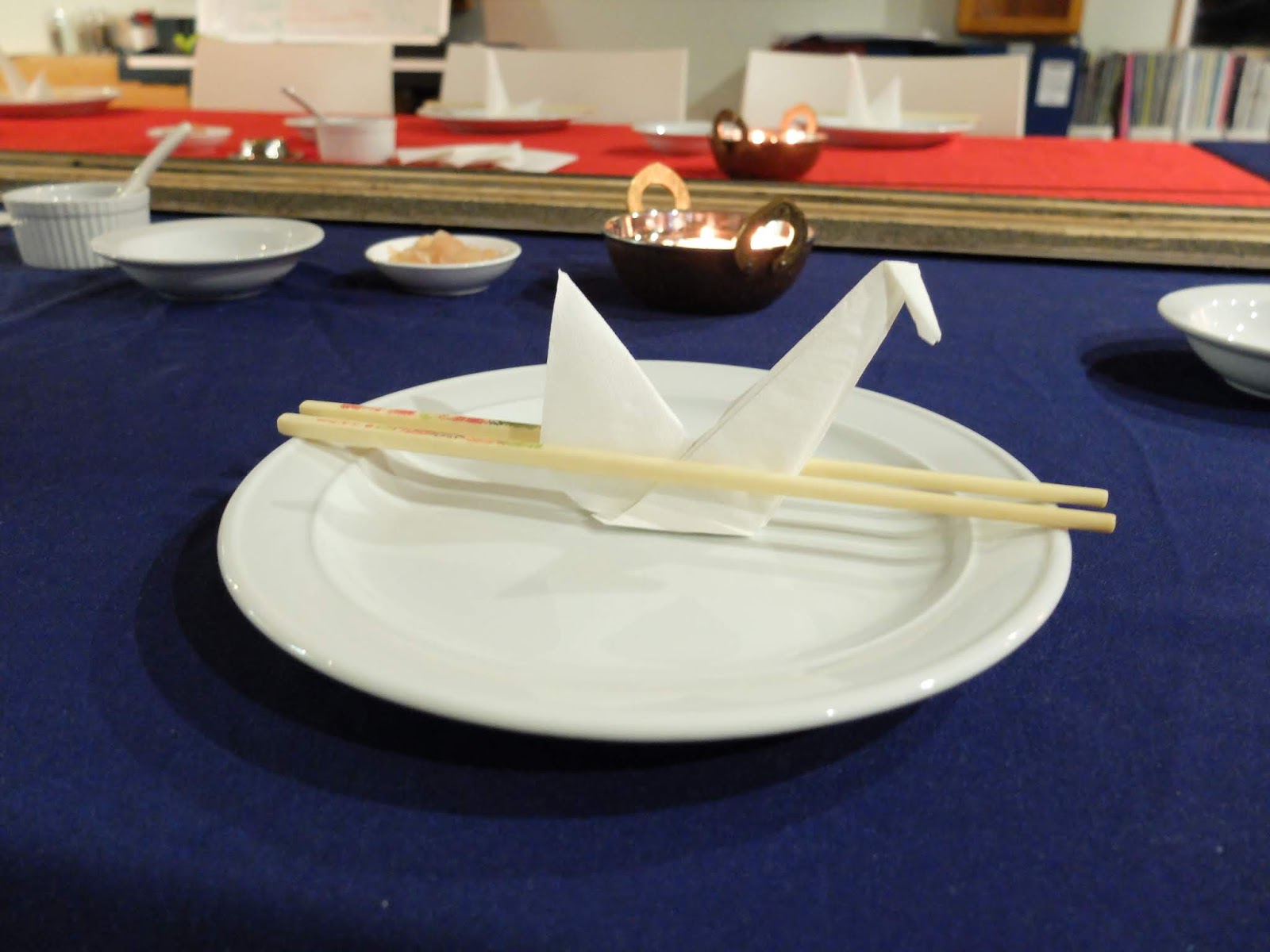
Ranger Chris sorts out his origami napkin folding after a half hour of googling

Jez tries to decide what he'll have first

Pete takes on the role of conductor/driver and spends most of the night winding the train up and down the table. Ali keeps an eye on proceedings.

Just course number 4 of 6 - tempura seafood. Mmmm.

Toot toot

So much choice. Greg and Rich decide on dessert.


It's been a fabulous trip around the sun. The final entry.

As quickly as it started, it has all come to a finish.  The Aurora Australis arrived at Macquarie Island in early March, bring this yea...